

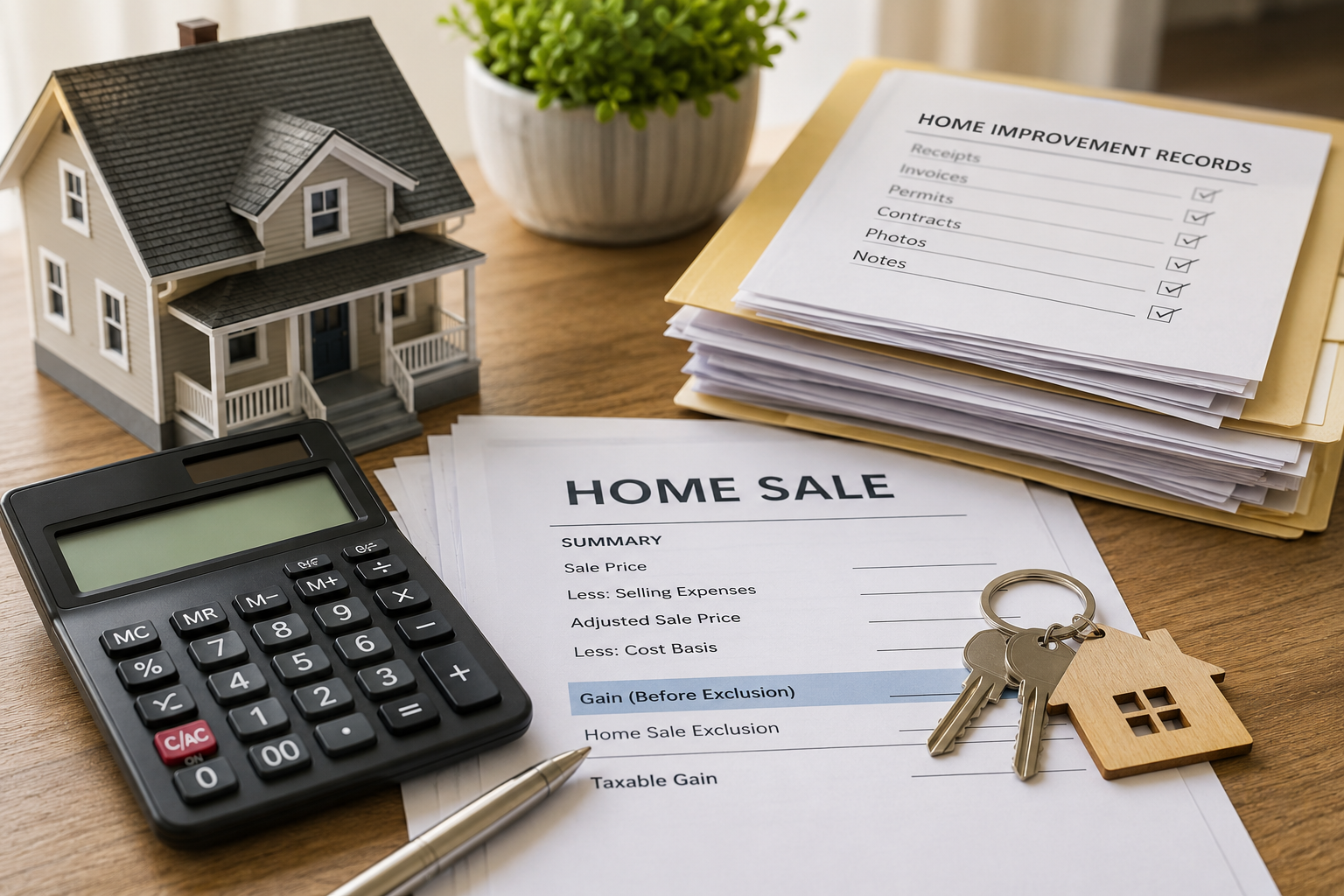
Tax Tip Tuesday: The Home Sale Exclusion Can Save You Thousands
Selling your home can be exciting.
It can also raise an important tax question:
Will you owe taxes on the profit?
The answer may be no.
Many homeowners qualify for the Home Sale Exclusion, one of the most valuable tax benefits available to individuals. If you meet the IRS requirements, you may be able to exclude up to $250,000 of gain if you’re single or up to $500,000 if you’re married filing jointly.
That’s a significant amount of tax-free profit.
In this week’s Tax Tip Tuesday, we’ll explain how the Home Sale Exclusion works, who qualifies, and why keeping good records can help maximize your tax benefits.
What Is the Home Sale Exclusion?
The Home Sale Exclusion allows eligible taxpayers to exclude a portion of the gain from the sale of their primary residence from federal income taxes.
Current exclusion amounts are:
- Up to $250,000 for single taxpayers
- Up to $500,000 for married taxpayers filing jointly
For many homeowners, this means they can sell their home and owe little or no federal tax on the profit.
Who Qualifies for the Home Sale Exclusion?
The IRS applies two primary tests:
Ownership Test
You must have owned the home for at least two years during the five-year period ending on the sale date.
Use Test
You must have used the property as your principal residence for at least two years during the same five-year period.
The ownership and use periods do not have to be consecutive.
Many taxpayers are surprised to learn that temporary absences may not automatically disqualify them.
For official guidance, review IRS Publication 523 Selling Your Home.
How the Home Sale Exclusion Works
Let’s look at a simple example.
Suppose you:
- Purchased your home for $250,000
- Sold it for $600,000
- Have a gain of $350,000
If you’re married filing jointly and meet the IRS requirements, the entire $350,000 gain may be excluded from federal income taxes because it falls below the $500,000 exclusion limit.
Without the Home Sale Exclusion, that gain could create a substantial tax bill.
Why Tracking Home Improvement Costs Matters
Your home’s basis plays a major role in calculating gain.
That’s why homeowners should maintain records of qualifying improvements.
Examples include:
- Roof replacements
- Kitchen remodels
- Room additions
- HVAC upgrades
- Bathroom renovations
- Major landscaping projects
These improvements may increase your basis and reduce gain when the property is sold.
Homeowners preparing to sell should also review our recent article on Track Home Improvement Costs to better understand how basis affects capital gains calculations.
Common Situations That Create Confusion
The Home Sale Exclusion sounds simple.
Sometimes it isn’t.
Common situations that require additional analysis include:
- Rental use of the property
- Partial business use
- Multiple home ownership
- Divorce or separation
- Inherited property
- Military duty exceptions
These circumstances may affect eligibility or exclusion calculations.
That’s why planning before the sale is often beneficial.
The Home Sale Exclusion and Other Tax Strategies
Home sales don’t happen in isolation.
They often intersect with other tax planning opportunities.
Homeowners may benefit from reviewing related tax topics such as Understanding the SALT Deduction, Deduct Mortgage Interest, and Refinancing Your Mortgage to fully evaluate the tax impact of homeownership.
Understanding your overall financial picture can help prevent surprises at tax time.
Common Mistakes Homeowners Make
We frequently see taxpayers:
- Assume all home sale profits are taxable
- Fail to document improvements
- Miscalculate basis
- Forget prior rental use
- Wait until closing to discuss tax consequences
The IRS has rules.
The sooner you understand them, the better your options become.
Key Takeaways
- • The Home Sale Exclusion may allow up to $250,000 (single) or $500,000 (married filing jointly) of gain to be excluded.
- • Most taxpayers must meet ownership and use requirements.
- • Home improvements can increase basis and reduce gain.
- • Documentation matters.
- • Planning before the sale often produces better tax outcomes.
Need Help Understanding the Tax Impact of Selling Your Home?
A home sale is one of the largest financial transactions many people will ever make.
The tax consequences deserve attention before closing day.
At Cheshier Tax Resolution, we help taxpayers understand how home sales, capital gains, and basis calculations affect their overall tax picture.
The sale may be years in the making.
The tax planning shouldn’t wait until the last minute.
Frequently Asked Questions
What is the Home Sale Exclusion?
The Home Sale Exclusion allows eligible taxpayers to exclude up to $250,000 of gain ($500,000 for married filing jointly) from the sale of a primary residence.
How long must I live in my home to qualify?
Generally, you must live in the home as your primary residence for at least two years during the five-year period before the sale.
Do I have to own the home for two years?
Yes. Most taxpayers must satisfy both the ownership test and the use test.
Does the Home Sale Exclusion apply to rental property?
Generally no, although certain mixed-use situations may qualify for partial treatment.
Do home improvements affect the Home Sale Exclusion?
Improvements increase your basis, which can reduce gain before the exclusion is applied.
Can married couples exclude $500,000?
Yes, if they meet the applicable ownership and use requirements.
Stay Connected
Stay connected with Cheshier Tax Resolution for updates on community involvement, tax law changes, and insights that help taxpayers stay compliant and informed – we invite you to subscribe to our monthly newsletter.
Our newsletter delivers:
- Updates on tax law changes
- Insights from real resolution cases
- Proactive planning strategies
- Important filing deadlines and compliance reminders
- Company announcements and celebrations