
Tax Tip Tuesday: Track Home Improvement Costs. Save Taxes Later.
Most homeowners save receipts for major improvements while the project is happening.
Then they throw them away.
That can be an expensive mistake.
Many home improvements increase your home’s cost basis, which can reduce the taxable gain when you eventually sell the property. The IRS may not give you credit for those improvements unless you can document them.
In this week’s Tax Tip Tuesday, we’ll explain why tracking home improvement costs matters, what improvements qualify, and how proper recordkeeping can help reduce taxes when you sell your home.
This isn’t about saving taxes today.
It’s about protecting yourself years from now.
What Is Your Home’s Cost Basis?
Your home’s cost basis generally starts with:
- The purchase price
- Certain closing costs
- Settlement fees
Over time, your basis can increase when you make qualifying improvements to the property.
Why does this matter?
Because when you sell your home, the IRS generally calculates your gain by subtracting your adjusted basis from the sale price.
A higher basis often means a lower taxable gain.
Why Tracking Home Improvement Costs Matters
Many homeowners spend thousands – or even tens of thousands – of dollars improving their homes over the years.
Without records, those expenses may be forgotten.
Without proof, those costs may not help reduce taxes later.
Keeping accurate records of home improvement costs can help:
- Increase your home’s adjusted basis
- Reduce potential capital gains
- Support calculations if the IRS asks questions
- Improve accuracy when selling your property
The improvements you make today may provide tax benefits years from now.
What Home Improvements Increase Basis?
Not every home expense qualifies.
The IRS generally distinguishes between repairs and improvements.
Examples of Improvements That May Increase Basis
- New roof installation
- Room additions
- Kitchen remodels
- Bathroom renovations
- New HVAC systems
- New windows
- Deck additions
- Driveway replacement
- Major landscaping projects
- Accessibility improvements
These projects typically add value, extend useful life, or adapt the property for new uses.
What Does NOT Increase Basis?
Routine maintenance and repairs generally do not increase basis.
Examples include:
- Painting
- Fixing leaks
- Replacing broken windows
- Minor plumbing repairs
- Routine landscaping maintenance
- Appliance repairs
These expenses may be necessary, but they usually do not qualify as capital improvements.
Understanding the difference can prevent costly recordkeeping mistakes.
What Records Should You Keep?
Good documentation is your best friend.
The IRS may not simply take your word for it years later.
Helpful records include:
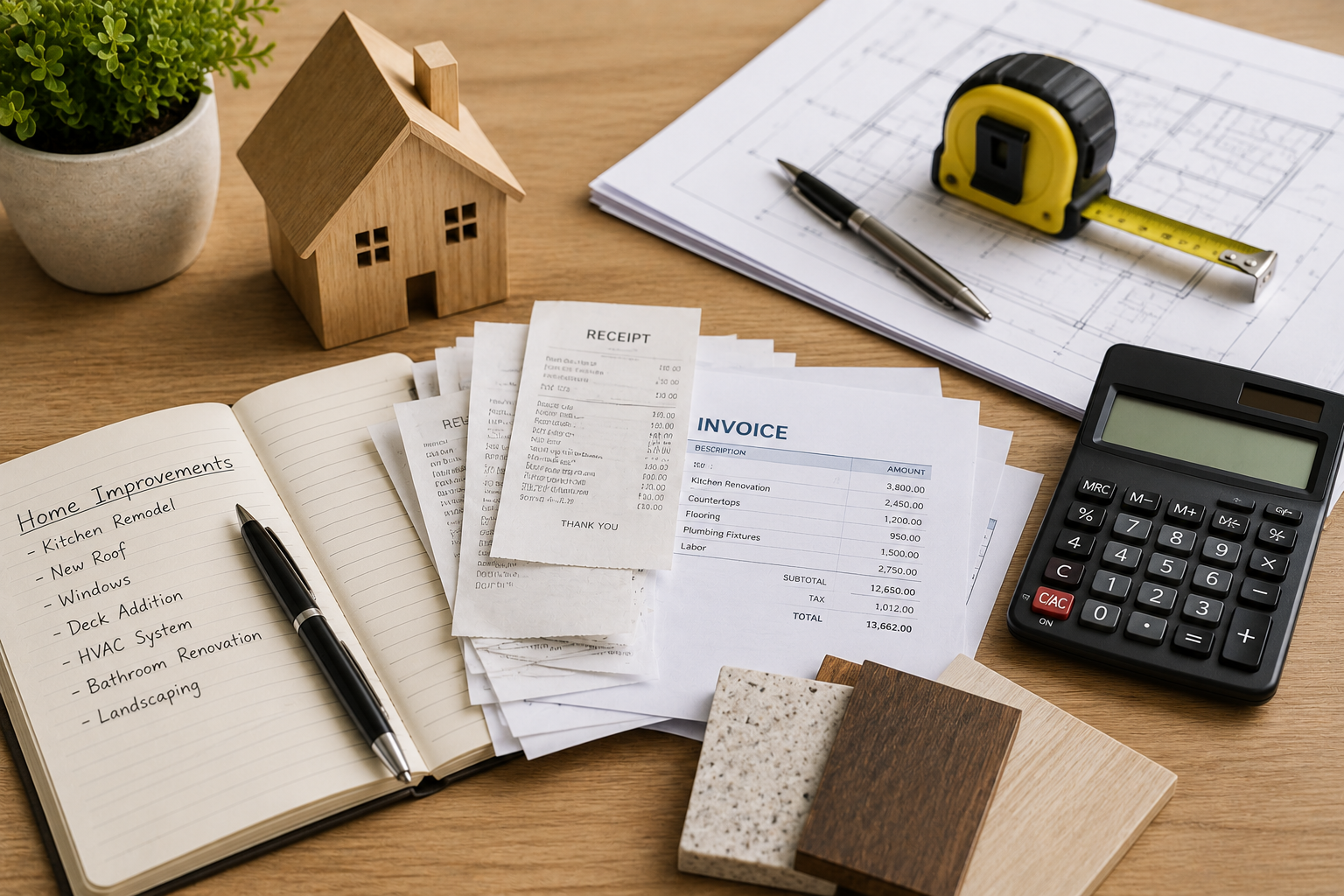
- Contractor invoices
- Receipts
- Building permits
- Material purchases
- Canceled checks
- Credit card statements
- Before-and-after photos
Consider maintaining a dedicated digital folder for all home improvement records.
Future-you will be thankful.
Home Improvements and Capital Gains
Many homeowners qualify for the home sale exclusion under IRS rules.
Currently, eligible taxpayers may exclude:
- Up to $250,000 of gain (single filers)
- Up to $500,000 of gain (married filing jointly)
However, not everyone qualifies for the full exclusion.
And property appreciation can exceed those limits.
In those situations, documenting home improvement costs becomes even more valuable because increasing basis reduces taxable gain.
For official guidance, review IRS Publication 523 (Selling Your Home) and IRS information regarding home sales. Other important resources can be found at IRS Home Sale Exclusion Rules as well as IRS Capital Gains Information
How Home Improvements Fit Into Your Tax Strategy
Tax planning doesn’t start when you sell the house.
It starts years earlier.
Homeowners who track improvement costs alongside other tax records are often better prepared for future transactions.
You may also benefit from reviewing related tax planning strategies such as Deduct Mortgage Interest, Understanding the SALT Deduction, and Refinancing Mortgage Interest Deduction Rules for Homeowners.
These topics work together to help homeowners maximize available tax benefits.
Other relevant information that can help your overall tax strategy can and should be reviewed, such as Understand Your Tax Bracket and Deduct Unreimbursed Medical Expenses
Common Mistakes Homeowners Make
We frequently see taxpayers:
- Lose receipts after renovations
- Confuse repairs with improvements
- Fail to track project costs over time
- Discard contractor invoices
- Forget about older renovations when selling
These mistakes can result in a lower basis and potentially higher taxes.
The IRS doesn’t reward good memory.
The IRS rewards good records.
Key Takeaways
- Home improvements can increase your property’s tax basis.
- A higher basis can reduce taxable gain when you sell.
- Repairs and maintenance generally do not increase basis.
- Good documentation is essential.
- Recordkeeping today can create tax savings years from now.
Need Help Understanding Capital Gains and Basis?
Selling a home often involves more than simply calculating the sale price.
Your basis, exclusions, improvements, and documentation all matter.
At Cheshier Tax Resolution, we help taxpayers understand the tax consequences of major financial transactions before surprises occur.
A little preparation now can save significant money later.
Frequently Asked Questions
What is a home’s cost basis?
A home’s cost basis generally starts with the purchase price and increases through qualifying capital improvements.
Do home improvements reduce taxes?
They can indirectly reduce taxes by increasing basis and reducing taxable gain when the property is sold.
Does a new roof increase basis?
Generally yes. A new roof is typically considered a capital improvement.
Do repairs increase basis?
Usually no. Routine maintenance and repairs generally do not increase a home’s basis.
How long should I keep home improvement records?
Keep them for as long as you own the property and for several years after selling.
What records should I keep for home improvements?
Save invoices, receipts, permits, contracts, payment records, and supporting documentation.
Stay Connected
Stay connected with Cheshier Tax Resolution for updates on community involvement, tax law changes, and insights that help taxpayers stay compliant and informed – we invite you to subscribe to our monthly newsletter.
Our newsletter delivers:
- Updates on tax law changes
- Insights from real resolution cases
- Proactive planning strategies
- Important filing deadlines and compliance reminders
- Company announcements and celebrations