

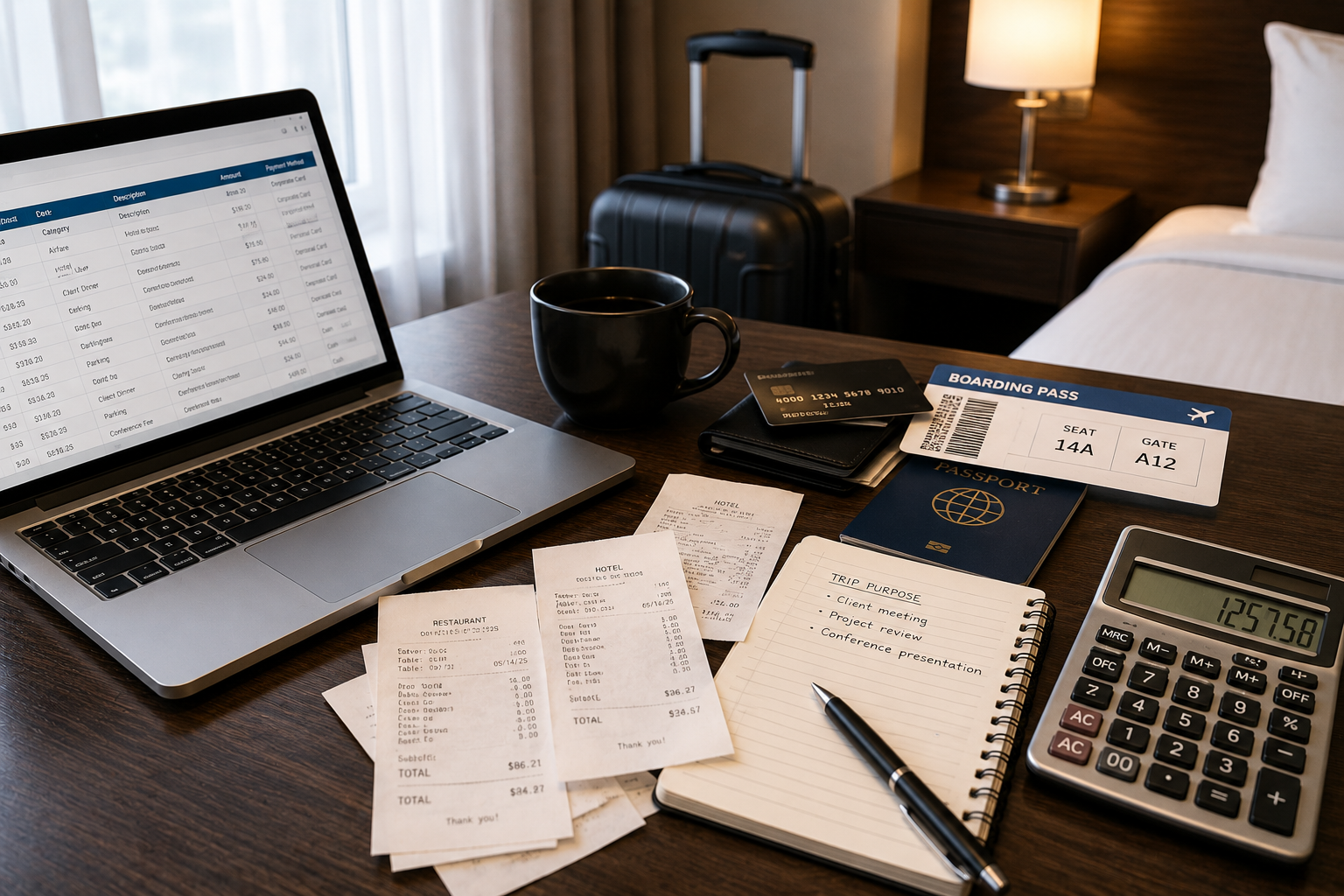
Tax Tip Tuesday: Business Travel Expenses: What Business Owners Can Deduct
Business Travel Expenses can add up quickly when you’re self-employed or running a business. Airfare, hotels, transportation, meals, and other costs may be deductible when you’re traveling for a legitimate business purpose—but knowing which expenses qualify and keeping good records are essential.
The IRS generally allows businesses to deduct ordinary and necessary expenses associated with traveling away from their tax home for business. However, personal expenses aren’t deductible, entertainment generally isn’t deductible, and most qualifying business meals are limited to a 50% deduction.
In this week’s Tax Tip Tuesday, we’re looking at what qualifies as business travel, which expenses you may be able to deduct, how the business-meal rules work, and why keeping receipts is so important.
When Do Business Travel Expenses Qualify?
Not every trip related to work automatically qualifies as deductible business travel.
For tax purposes, the IRS generally considers you to be traveling away from your tax home when your business duties require you to be away from the general area of your tax home substantially longer than an ordinary workday and you need sleep or rest to meet the demands of your work.
Your “tax home” generally refers to your regular place of business or post of duty—not necessarily the location of your personal residence.
That’s an important distinction.
A legitimate trip to attend a business conference in another city, meet with customers, visit a business location, or perform work away from your tax home may qualify. Your daily commute between your residence and regular workplace generally isn’t treated the same way.
The IRS provides detailed guidance in Publication 463, Travel, Gift, and Car Expenses, which business owners should review when determining whether particular travel costs qualify.
Which Business Travel Expenses May Be Deductible?
Exclusive and regular use aren’t the only considerations.
Your home office may qualify as your principal place of business when you use it exclusively and reWhen a trip qualifies as business travel, several ordinary and necessary costs may potentially be deductible.
Examples can include:
- Airfare, train, bus, or qualifying vehicle expenses
- Hotel and other lodging costs
- Transportation between the airport and hotel
- Transportation between your hotel and business location
- Baggage fees
- Business telephone and communication costs
- Dry cleaning and laundry during qualifying business travel
- Tips related to qualifying travel expenses
- Certain business meals
Keeping receipts and maintaining a clear record of the business purpose of the trip can make tax preparation much easier.
This is where the recordkeeping habits discussed in our Business Expense Deductions article become particularly important. A credit-card charge may prove that you spent money, but maintaining supporting documentation helps establish why the expense was business related.
Business Travel Expenses vs. Personal Travel
Mixing business and pleasure requires additional care.
If a trip is primarily for business, qualifying business-related expenses may still be deductible even when you spend some personal time at the destination. However, personal expenses generally remain nondeductible.
If the trip is primarily personal—such as a vacation—adding a business meeting or another incidental business activity generally doesn’t transform the entire vacation into deductible Business Travel Expenses.
For example, suppose you travel to another state primarily for a business conference but stay an additional two days for sightseeing. The qualifying costs associated with the business portion may receive different tax treatment from your hotel, meals, entertainment, and other expenses during the personal portion.
Good documentation helps establish that distinction.
Business Meals Are Generally 50% Deductible
If you qualify, the Home Office Deduction can potentially include a business portion of certain One of the most misunderstood areas involves meals.
In most cases, qualifying business meals are only 50% deductible.
For a business meal to qualify, the expense generally must be ordinary and necessary, not lavish or extravagant under the circumstances, and the taxpayer or an employee must be present. When meals involve another person, that person generally should be a current or potential business customer, client, consultant, or similar business contact.
Meals incurred while traveling away from your tax home for qualifying business purposes are also generally subject to the 50% limitation.
For example, if you spend $80 on an otherwise qualifying business meal, the deductible amount would generally be $40.
There are exceptions to the 50% rule, so it shouldn’t be treated as an absolute rule for every food or beverage expense. The IRS discusses those exceptions in Publication 463.
Don’t Confuse Business Meals With Entertainment
Meals and entertainment are no longer treated the same way for federal tax purposes.
Most entertainment expenses are generally not deductible, even when there is a business purpose.
That can include expenses associated with activities such as sporting events, theaters, clubs, and other entertainment or recreational activities.
However, food and beverages associated with an entertainment event may potentially qualify as a business meal when they’re purchased separately from the entertainment or separately stated on the bill, assuming the other requirements for deductibility are satisfied.
This makes itemized receipts particularly valuable.
A receipt showing one combined entertainment charge may produce a very different tax result from documentation that separately identifies qualifying food and beverage costs.
Which method produces the better result depends on the taxpayer’s circumstances. Simpler doesn’t necessarily mean larger, and a larger potential deduction doesn’t necessarily mean the additional recordkeeping is appropriate for everyone.
Keep Records for Business Travel Expenses
Documentation is one of the most important parts of claiming Business Travel Expenses.
Don’t rely on memory when tax season arrives.
For each business trip, consider maintaining records showing:
- Date of travel
- Destination
- Business purpose
- People involved in business meetings
- Transportation costs
- Lodging expenses
- Meal expenses
- Receipts and invoices
- Conference or event registration
- Mileage when applicable
- Any reimbursements received
The IRS explains in Publication 463 that taxpayers should maintain records of their travel expenses and supporting documentation.
Digital recordkeeping can make this significantly easier. Photograph receipts when you receive them, categorize expenses in your bookkeeping system, and make a note of the business purpose while the details are fresh.
Our article on Business Expense Deductions provides additional guidance on developing good year-round recordkeeping habits.
Can You Use a Meal Allowance Instead of Actual Receipts?
For qualifying travel meals, taxpayers may sometimes use the standard meal allowance rather than tracking the actual cost of every meal.
The applicable allowance varies based on the travel location and timing.
However, using the standard meal allowance doesn’t eliminate all recordkeeping requirements. You still need records establishing the time, place, and business purpose of the travel.
And importantly, the standard meal allowance is also generally subject to the 50% deduction limitation.
For lodging, there isn’t a comparable optional standard lodging deduction for these purposes—the allowable lodging deduction generally depends on actual qualifying costs.
Business Travel Expenses and Your Overall Tax Strategy
Travel and meals are just two components of a business’s overall tax picture.
Consistent bookkeeping can help business owners identify Business Expense Deductions, calculate Estimated Tax Payments, evaluate the Qualified Business Income Deduction, and maintain the documentation needed when preparing a return.
The goal isn’t to turn every expense into a tax deduction.
The goal is to accurately identify legitimate business expenses and maintain the records necessary to support them.
At Cheshier Tax Resolution, we encourage business owners and self-employed taxpayers to make tax recordkeeping part of their regular business routine rather than an annual tax-season project.
Business Travel Expenses: The Bottom Line
Business Travel Expenses may provide valuable deductions when travel is ordinary, necessary, properly connected to your business, and adequately documented.
Remember the fundamentals:
Keep your receipts.
Document the business purpose.
Separate personal expenses from business expenses.
And remember that most qualifying business meals are generally only 50% deductible.
Strong records today can make accurate tax preparation—and smart tax planning—much easier tomorrow.
Frequently Asked Questions
What Business Travel Expenses are tax deductible?
Qualifying ordinary and necessary expenses may include transportation, lodging, local transportation, certain communication expenses, laundry and dry cleaning during business travel, tips, and qualifying business meals.
Are business meals 100% deductible?
Generally, no. Most qualifying business meals are subject to a 50% deduction limitation, although specific exceptions exist.
Can I deduct entertainment for a client?
Generally, entertainment expenses aren’t deductible. However, qualifying food and beverages at an entertainment event may potentially be treated separately when purchased separately or separately stated from the entertainment cost.
Do I need receipts for Business Travel Expenses?
Business owners should maintain adequate records supporting the amount, time, place, and business purpose of qualifying expenses. Receipts, invoices, travel itineraries, mileage records, and similar documentation can help substantiate deductions.
Can I deduct a trip that combines business and vacation?
Potentially, but the rules depend on the circumstances and whether the trip is primarily for business or personal reasons. Personal portions of a trip generally aren’t deductible.
Stay Connected
Stay connected with Cheshier Tax Resolution for updates on community involvement, tax law changes, and insights that help taxpayers stay compliant and informed – we invite you to subscribe to our monthly newsletter.
Our newsletter delivers:
- Updates on tax law changes
- Insights from real resolution cases
- Proactive planning strategies
- Important filing deadlines and compliance reminders
- Company announcements and celebrations