Kwong v. United States: Why Millions of Taxpayers May Need to Act Before July 10, 2026
A little-known federal court case is creating major discussion throughout the tax resolution industry — and it could potentially impact millions of taxpayers across the country.
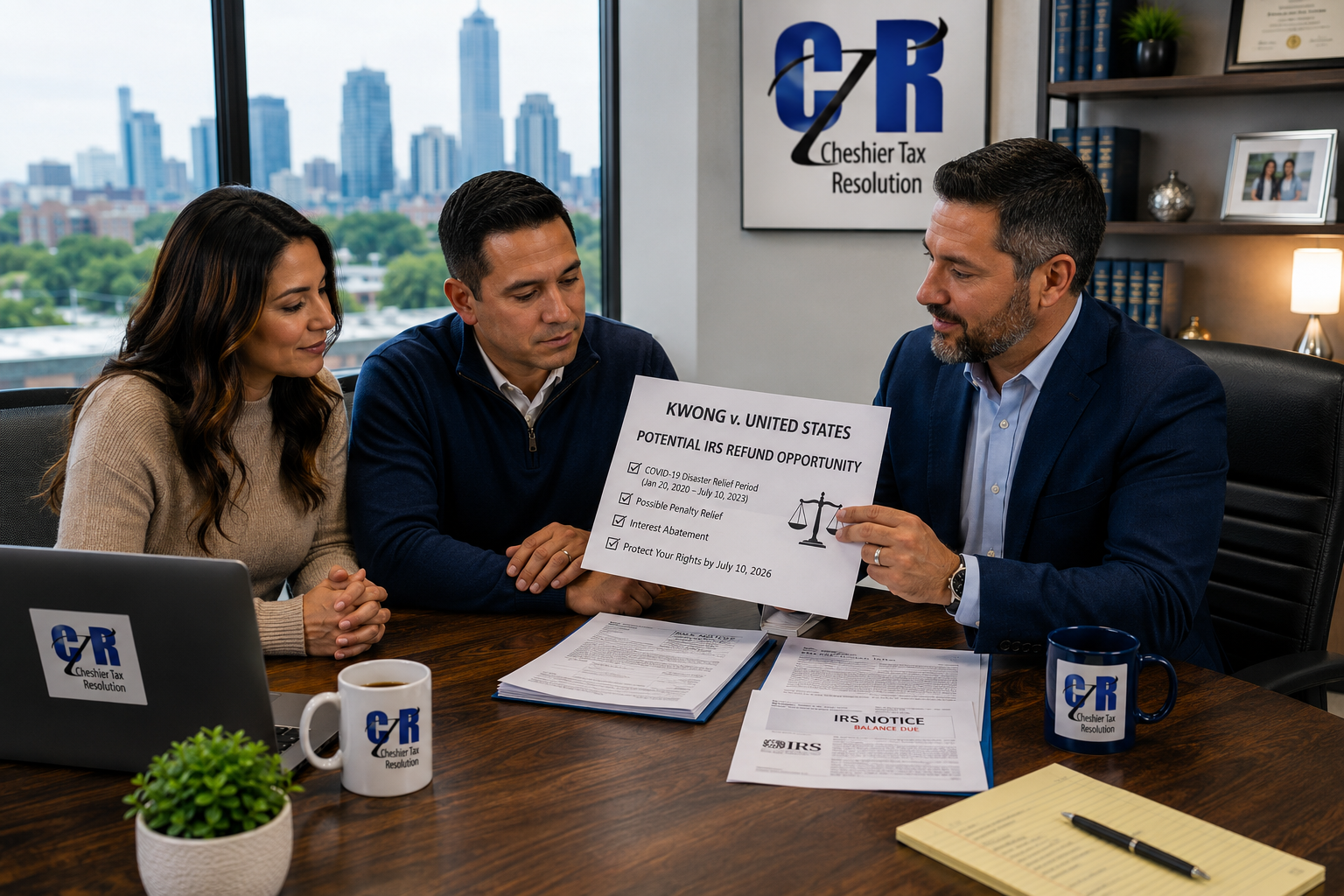
The case, Kwong v. United States, centers around whether the Internal Revenue Service improperly assessed certain penalties and interest during the COVID-19 disaster relief period. While the litigation is still ongoing, the decision has opened the door to possible refund and abatement claims for taxpayers who were penalized between 2020 and 2023.
At Cheshier Tax Resolution, we have been closely monitoring developments because this issue may affect both current and potential clients — especially individuals and businesses who received late filing penalties, failure-to-pay penalties, or related IRS assessments during the pandemic years.
What Is Kwong v. United States?
In late 2025, the U.S. Court of Federal Claims issued a significant ruling in Kwong v. United States involving Internal Revenue Code Section 7508A(d), a disaster relief provision tied to federally declared emergencies.
The court concluded that the COVID-19 federal disaster declaration may have automatically extended certain federal tax deadlines from January 20, 2020, through July 10, 2023. Under this interpretation, some penalties and interest assessed during that period may not have been legally enforceable.
This is why the case has attracted national attention from:
- Tax attorneys
- CPA firms
- National media outlets
- The National Taxpayer Advocate
- Tax resolution professionals
The potential impact could be widespread.
Why This Matters to Taxpayers
If the ruling ultimately stands, affected taxpayers may be eligible to request refunds or abatements for certain:
- Failure-to-file penalties
- Failure-to-pay penalties
- Underpayment interest
- Pandemic-era IRS assessments
According to the National Taxpayer Advocate, the issue is “widespread and not limited to a small or specialized group of taxpayers.”
This could affect:
- Individuals
- Small business owners
- Estates and trusts
- Corporations
- Taxpayers with estimated tax penalties
In other words, this is not a niche issue. It may apply to millions of taxpayers nationwide.
The July 10, 2026 Deadline
One of the most important aspects of the Kwong discussion is timing.
Many tax professionals are encouraging taxpayers to file protective refund claims before July 10, 2026 in order to preserve their rights while the litigation continues.
A protective claim does not guarantee a refund. Instead, it preserves the taxpayer’s ability to pursue one if the courts ultimately rule in taxpayers’ favor.
Missing the deadline could permanently eliminate the ability to recover certain penalties or interest — even if the courts later uphold the Kwong interpretation.
What the National Taxpayer Advocate Is Saying
The National Taxpayer Advocate Blog has published multiple articles discussing the potential implications of the case and encouraging taxpayers to review whether they may be affected.
The Advocate has emphasized:
- The issue could impact tens of millions of taxpayers
- Relief is not automatic
- Taxpayers may need to act proactively
- Form 843 protective claims may be necessary
This has added additional urgency throughout the tax community.
Major News Outlets Are Covering the Story
The Kwong case has also gained traction in major national media coverage.
Recent reporting and analysis include:
- Associated Press coverage of Kwong refunds
- Forbes analysis of the Kwong ruling
- Journal of Accountancy coverage
- Thomson Reuters tax analysis
These reports consistently highlight the same theme: taxpayers may need to take action now to preserve refund opportunities while appeals continue.
Why Professional Guidance Matters
While headlines may make the process sound simple, these claims involve:
- Statute of limitation analysis
- IRS transcript review
- Protective claim procedures
- Technical interpretation of tax code provisions
- Ongoing litigation uncertainty
Not every taxpayer qualifies, and not every penalty is affected.
At Cheshier Tax Resolution, we are helping clients:
- Review IRS transcripts
- Identify potentially impacted penalties
- Evaluate eligibility
- Determine whether protective claims should be filed
- Preserve rights while the litigation develops
Because the legal landscape is still evolving, strategy matters.
Final Thoughts
Kwong v. United States may ultimately become one of the most significant taxpayer-rights cases to emerge from the COVID era.
While the courts continue to address the issue, taxpayers who may have been assessed penalties or interest between 2020 and 2023 should not ignore the potential opportunity — or the approaching deadlines.
If you believe you may have been impacted, now is the time to review your IRS account history and understand your options.
At Cheshier Tax Resolution, we are continuing to monitor developments closely and help taxpayers determine the best path forward.
FAQs
What is Kwong v. United States?
Kwong v. United States is a federal court case involving IRS penalties and tax deadline extensions tied to COVID-19 disaster relief provisions.
Who may be affected by the Kwong ruling?
Taxpayers who paid certain IRS penalties or interest between 2020 and 2023 may potentially qualify for refunds or abatements.
What is a protective refund claim?
A protective refund claim preserves your right to seek a refund while litigation or legal interpretation remains unresolved.
What is the deadline to act?
Many professionals are encouraging taxpayers to consider filing protective claims before July 10, 2026, to preserve potential rights.
Stay Connected!
Stay connected with Cheshier Tax Resolution for updates on community involvement, tax law changes, and insights that help taxpayers stay compliant and informed – we invite you to subscribe to our monthly newsletter.
Our newsletter delivers:
- Updates on tax law changes
- Insights from real resolution cases
- Proactive planning strategies
- Important filing deadlines and compliance reminders
- Company announcements and celebrations