
Charitable Donation Scams: IRS Tips to Protect Your Donations
Charitable donation scams are becoming increasingly common, especially following natural disasters, public emergencies, and high-profile tragedies. While most charitable organizations work hard to help those in need, scammers often exploit people’s generosity by creating fake charities, requesting fraudulent donations, or promoting tax schemes involving inflated charitable deductions.
The IRS recently highlighted charitable donation scams as part of its annual Dirty Dozen list of tax scams. Understanding how these scams work can help protect both your financial information and your tax deduction.
At Cheshier Tax Resolution, we believe informed taxpayers make better financial decisions. That’s why we regularly publish educational resources, including our guide to the Taxpayer Bill of Rights, to help taxpayers recognize legitimate IRS procedures and avoid costly scams.
How Charitable Donation Scams Work
Charitable donation scams typically fall into two categories:
- Fake charities that solicit donations but never help those in need.
- Tax schemes involving inflated values for donated property.
Scammers often use emotional appeals following hurricanes, floods, wildfires, or other disasters to pressure people into donating immediately. They may create convincing websites, impersonate well-known nonprofits, or contact potential donors by phone, email, text message, or social media.
One of the biggest warning signs is pressure to donate immediately without giving you time to verify the organization.
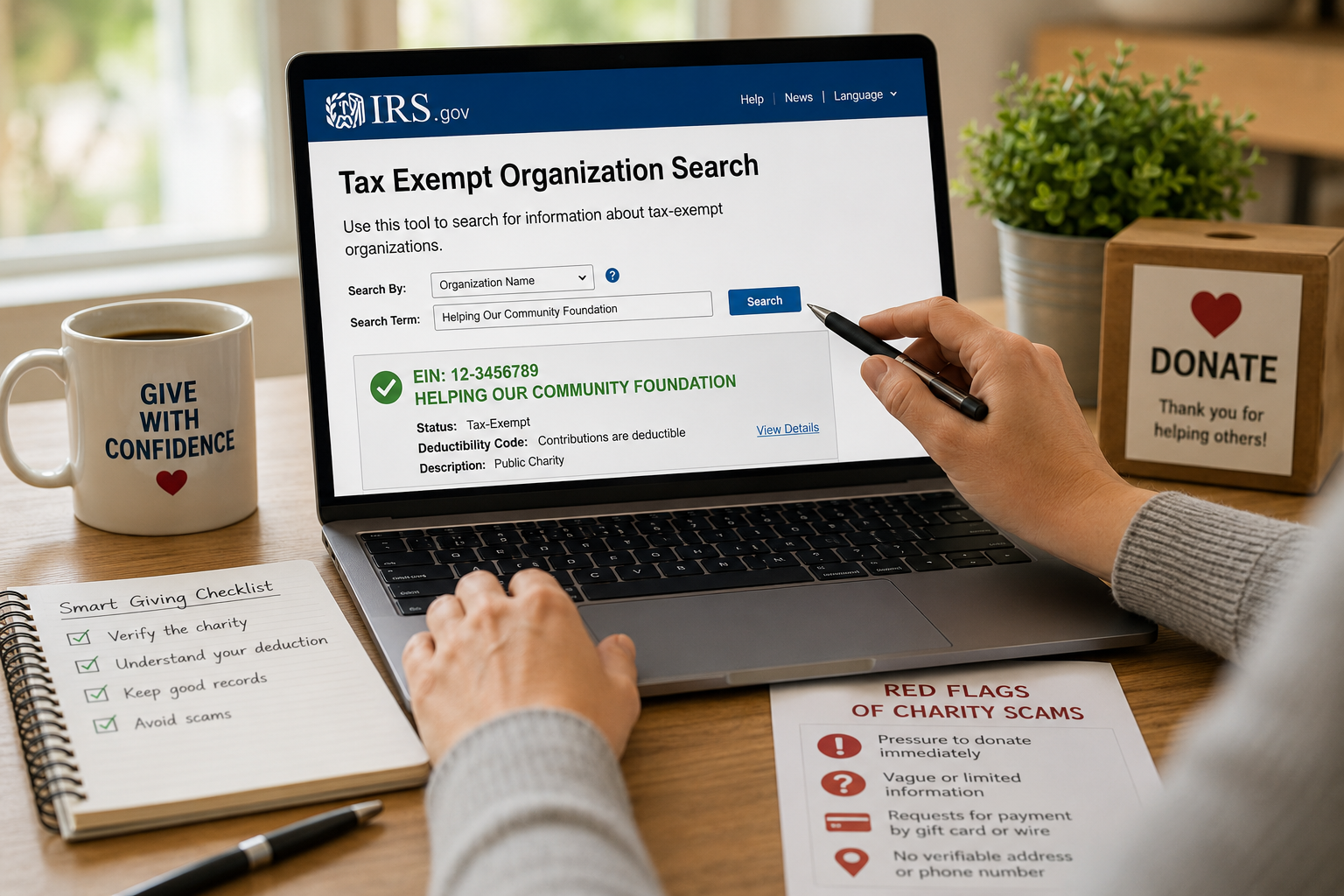
Before donating, take a few minutes to confirm the charity is legitimate using the IRS Tax Exempt Organization Search tool. Taking this simple step can help ensure your donation reaches the intended cause and qualifies for a potential tax deduction.
Verify the Charity Before You Donate
Not every organization that asks for donations qualifies as a tax-exempt charity.
According to the IRS, donations made directly to individuals—even if they’re experiencing hardship—generally are not tax deductible.
Instead, donations should be made to qualified charitable organizations recognized by the IRS.
Knowing how the IRS communicates with taxpayers can also help you distinguish legitimate information from fraudulent requests. Our article on the Right to Be Informed, one of the ten protections within the Taxpayer Bill of Rights, explains what taxpayers should expect when dealing with the IRS and why accurate information matters.
Before making a contribution:
Never provide unnecessary personal or financial information.
- Verify the organization through the IRS Tax Exempt Organization Search.
- Research the charity’s reputation.
- Avoid donating through suspicious links sent by text or email.
- Never provide unnecessary personal or financial information.
Protect Your Charitable Tax Deduction
One reason charitable donation scams are so effective is that they promise tax savings.
While many charitable contributions are deductible, taxpayers must follow IRS rules to claim those deductions properly.
To protect your deduction:
- Keep donation receipts.
- Save written acknowledgments for larger gifts.
- Maintain records of electronic donations.
- Document non-cash donations carefully.
- Itemize deductions when required under current IRS rules.
Good recordkeeping also protects you if the IRS ever asks questions about your return.
Our IRS Transcript Monitoring Program helps taxpayers stay informed about activity on their IRS accounts so they can respond quickly to notices or discrepancies before they become larger problems.
Beware of Non-Cash Charitable Contribution Schemes
The IRS also warns taxpayers about abusive schemes involving donated property.
These scams may involve:
- Artwork
- Real estate
- Vehicles
- Cryptocurrency
- Business interests
- Conservation easements
Promoters sometimes promise taxpayers they can eliminate or dramatically reduce their tax liability by assigning inflated values to donated property.
These arrangements frequently attract IRS scrutiny.
If you donate property, use qualified appraisers when required and report the fair market value accurately. An inflated valuation could lead to penalties, additional taxes, and interest.
If someone promises that a charitable contribution will virtually eliminate your tax bill, it’s worth getting an independent second opinion before signing any paperwork.
Common Mistakes That Can Cost You a Charitable Deduction
Many taxpayers unintentionally make mistakes that jeopardize otherwise legitimate deductions.
Some of the most common include:
- Donating to organizations that aren’t IRS-qualified.
- Failing to obtain receipts.
- Estimating property values without proper documentation.
- Assuming every online fundraiser qualifies for a deduction.
- Waiting until tax season to organize donation records.
Taking a few minutes to verify your documentation today can save significant time and frustration later.
Report Suspected Charitable Donation Scams
If you believe you’ve encountered a charitable donation scam, report it to the IRS.
The IRS allows taxpayers and tax professionals to confidentially submit information regarding suspected tax fraud and abusive tax schemes.
If you believe your identity has been compromised, take immediate steps to secure your IRS account. You can find more information about the process at IRS Identity Theft Central
Receiving an unexpected IRS notice after identity theft can be alarming. If that happens, don’t ignore it. Understanding the IRS collection process and knowing what your rights are can make responding much less stressful. We’ve published several educational articles explaining how IRS notices work and what options taxpayers have when they receive them.
Give Generously—Give Safely
Supporting charitable organizations remains one of the best ways to strengthen our communities, especially during times of crisis. The IRS also has guidance for best practices to track charitable donations.
The key is making sure your generosity reaches legitimate organizations instead of scammers.
By verifying charities, keeping good documentation, understanding IRS deduction rules, and staying informed about common tax scams, you can protect both your financial security and your charitable tax benefits.
If you have questions about charitable deductions, IRS notices, or resolving a tax issue, the experienced team at Cheshier Tax Resolution is here to help.
While you’re here, we also invite you to explore our educational resources on:
- Taxpayer Bill of Rights
- Right to Be Informed
- IRS Transcript Monitoring Program
- Understanding the IRS Collection Process
- Tax Resolution Services
The more you understand how the IRS works, the better equipped you’ll be to protect yourself from scams and make informed financial decisions.
FAQs
Are charitable donations always tax deductible?
No. Donations must generally be made to IRS-qualified tax-exempt organizations, and you must meet the applicable deduction requirements.
How can I verify whether a charity is legitimate?
Use the IRS Tax Exempt Organization Search tool to confirm that the organization is eligible to receive tax-deductible contributions.
Are donations to individuals tax deductible?
Generally, no. Donations made directly to individuals typically do not qualify for a charitable deduction.
What records should I keep?
Retain receipts, bank records, written acknowledgments, and documentation supporting the fair market value of donated property.
What are non-cash charitable contribution schemes?
These schemes involve overstating the value of donated property to improperly increase tax deductions.
What should I do if I suspect a charity is fraudulent?
Report suspected scams to the IRS and avoid providing personal or financial information.
Can the IRS audit charitable deductions?
Yes. The IRS may request documentation supporting charitable contributions claimed on a tax return.
Where can I learn more?
Visit IRS.gov for official guidance or contact a qualified tax professional if you have questions about charitable deductions or IRS notices.
Stay Connected!
Stay connected with Cheshier Tax Resolution for updates on community involvement, tax law changes, and insights that help taxpayers stay compliant and informed – we invite you to subscribe to our monthly newsletter.
Our newsletter delivers:
- Updates on tax law changes
- Insights from real resolution cases
- Proactive planning strategies
- Important filing deadlines and compliance reminders
- Company announcements and celebrations