

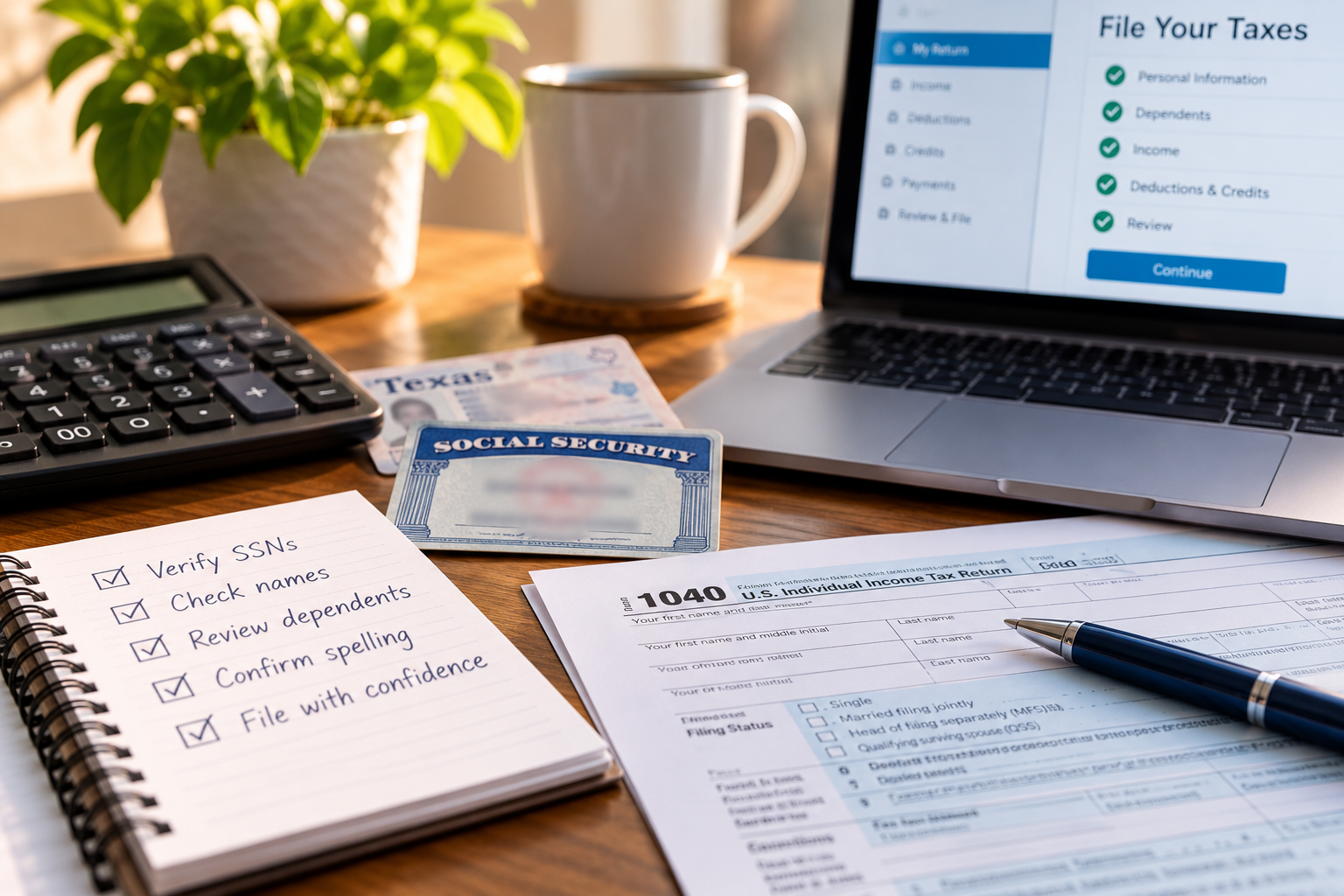
Tax Tip Tuesday: Social Security Number Errors: 5 Smart Ways to Avoid Tax Refund Delays
A single incorrect digit can create a frustrating delay when you are expecting a tax refund.
Social Security Number Errors are among the common mistakes that can cause the IRS to reject an electronically filed tax return. A mismatch involving your name, your spouse’s information, or a dependent’s Social Security number (SSN) can prevent your return from moving forward until the problem is corrected.
The good news? Many of these mistakes are preventable. Before filing your next federal income tax return, take a few minutes to verify the information that identifies everyone listed on it.
1. Why Social Security Number Errors Matter
The IRS uses Social Security numbers and other taxpayer identification information to match tax returns with its records. When you electronically file a return, the IRS checks certain identifying information before accepting it for processing.
If a Social Security number does not match the name associated with that number, your return may be rejected. That means the return has not yet been accepted for processing, and your refund cannot move forward as expected.
The IRS identifies incorrect or missing Social Security numbers as common filing errors in its tax return preparation checklist.
2. Check Every Name and Social Security Number
One of the easiest ways to prevent Social Security Number Errors is to compare the information on your tax return directly with each person’s Social Security card. Do not rely entirely on memory or information carried forward from a previous year’s return.
- Your full name and Social Security number
- Your spouse’s information, when applicable
- Each dependent’s name and Social Security number
- Recently changed names
- Numbers entered into your tax preparation software
Pay particular attention to transposed digits, missing numbers, and spelling differences. If you recently married, divorced, or legally changed your name, confirm that the Social Security Administration has the correct information. Your tax return should generally use the name currently associated with your Social Security number in Social Security Administration records.
3. Do Not Overlook Your Dependents’ Information
Social Security Number Errors involving dependents can create additional complications. Entering an incorrect number for a child may cause an electronic filing rejection. Missing or incorrect dependent identification information can also affect eligibility for certain tax benefits.
This is particularly important when claiming credits related to children or other qualifying dependents. The IRS explains the requirements for identifying dependents in Publication 501.
If your family circumstances changed during the year, do not assume last year’s dependent information is still correct. A new child, adoption, custody change, or dependent who filed their own return may require additional attention before filing.
4. Know What to Do if Your Tax Return Is Rejected
An electronic filing rejection does not automatically mean you are being audited or that you have done something seriously wrong. Sometimes the issue is simply a typo. If the IRS rejects your electronically filed return, review the rejection message carefully. It should help identify the problem.
For a straightforward name or Social Security number error, you can generally correct the information and electronically submit the return again. However, not every rejection can be resolved that easily.
If your return is rejected because a dependent’s Social Security number has already appeared on another return, verify the information and determine whether someone else may have claimed that dependent. Do not automatically remove a legitimate dependent simply to get the return accepted.
The IRS provides guidance on correcting rejected electronic tax returns. If the problem cannot be resolved electronically, filing a paper return may be necessary. Depending on the circumstances, eligible taxpayers may also have an electronic filing option using an IRS Identity Protection PIN.
5. Protect Your Social Security Number From Identity Theft
Sometimes Social Security Number Errors are not innocent mistakes. A rejected return may indicate that someone else has already filed using your Social Security number or a dependent’s number. That does not automatically establish identity theft, but it is a warning sign worth investigating.
If you suspect fraudulent use of your information, follow official IRS identity-theft procedures and avoid sharing personal information with anyone whose identity you have not verified.
Our previous coverage of IRS tax fraud and identity theft cases illustrates why protecting taxpayer information is so important.
Keep Social Security cards, tax records, and identification documents secure. Share sensitive information only through appropriate, trusted channels.
Can an Incorrect Social Security Number Delay Your Refund?
Yes. An incorrect Social Security number can prevent an electronically filed return from being accepted. Until the issue is corrected and the return is accepted, normal refund processing cannot begin. If an incorrect number or name creates a problem after filing, resolving the mismatch may also require additional IRS processing.
The IRS recommends electronic filing because it can identify many common mistakes before returns enter processing. Once your return has been accepted, you can monitor refund progress using the official IRS Where’s My Refund tool.
Remember: submitting a return electronically is not the same as having it accepted. Always confirm that your return was accepted rather than assuming the submission was successful.
Social Security Number Errors: The Bottom Line
Avoiding Social Security Number Errors is one of the simplest ways to reduce preventable tax filing problems. Before submitting your return, verify every name and identification number against the appropriate records, including those of your spouse and dependents.
If your return is rejected, address the issue promptly rather than assuming the IRS will correct it automatically.
At Cheshier Tax Resolution, we understand how frustrating IRS processing problems can become, particularly when taxpayers receive unexpected notices or encounter unresolved filing issues. If a filing problem develops into an ongoing IRS matter, understanding what happened and taking the appropriate corrective steps is essential. Our article on IRS Substitute for Return issues also explains why accurate, properly filed returns matter when addressing IRS filing problems.
A few minutes spent checking your information before filing can help prevent weeks of unnecessary frustration.
Frequently Asked Questions
Can an incorrect Social Security number delay my tax refund?
Yes. Incorrect Social Security numbers can cause an electronically filed return to be rejected, preventing refund processing until the filing problem is resolved.
What happens if my dependent’s Social Security number is wrong?
Your return may be rejected, and certain tax benefits may be affected. Verify the dependent’s information against their Social Security card and correct any errors.
Can I correct Social Security Number Errors after filing?
If your electronically filed return is rejected, you can generally correct a straightforward mistake and resubmit it. If the IRS has already accepted the return, the appropriate correction process depends on the circumstances.
Why does the IRS say my Social Security number does not match my name?
Your name and Social Security number may not match Social Security Administration records. This can happen because of a typing mistake or a name change that has not been updated in the relevant records.
What if someone else used my dependent’s Social Security number?
Verify the dependent’s information and eligibility first. A duplicate number can result from an error, another person’s dependent claim, or possible identity theft. The appropriate filing steps depend on the rejection reason and your circumstances.
Stay Connected
Stay connected with Cheshier Tax Resolution for updates on community involvement, tax law changes, and insights that help taxpayers stay compliant and informed – we invite you to subscribe to our monthly newsletter.
Our newsletter delivers:
- Updates on tax law changes
- Insights from real resolution cases
- Proactive planning strategies
- Important filing deadlines and compliance reminders
- Company announcements and celebrations