

Disaster Tax Preparedness: Protect Your Records Before Disaster Strikes
Disaster tax preparedness probably isn’t the first thing most people think about when preparing for a hurricane, tornado, flood, wildfire or other emergency. But protecting your tax and financial records before a disaster can make the recovery process much easier.
Tax returns, insurance policies, property records, payroll information and other financial documents may be needed to file insurance claims, apply for assistance, reconstruct financial records or determine whether disaster-related tax relief is available.
During National Preparedness Month, the IRS is reminding individuals, businesses and tax professionals to protect important documents, create electronic backups and know where to find assistance before an emergency occurs.
Here are seven important disaster tax preparedness steps taxpayers and business owners can take now.
1. Protect Important Tax and Financial Documents
Start with documents that could be difficult or time-consuming to replace.
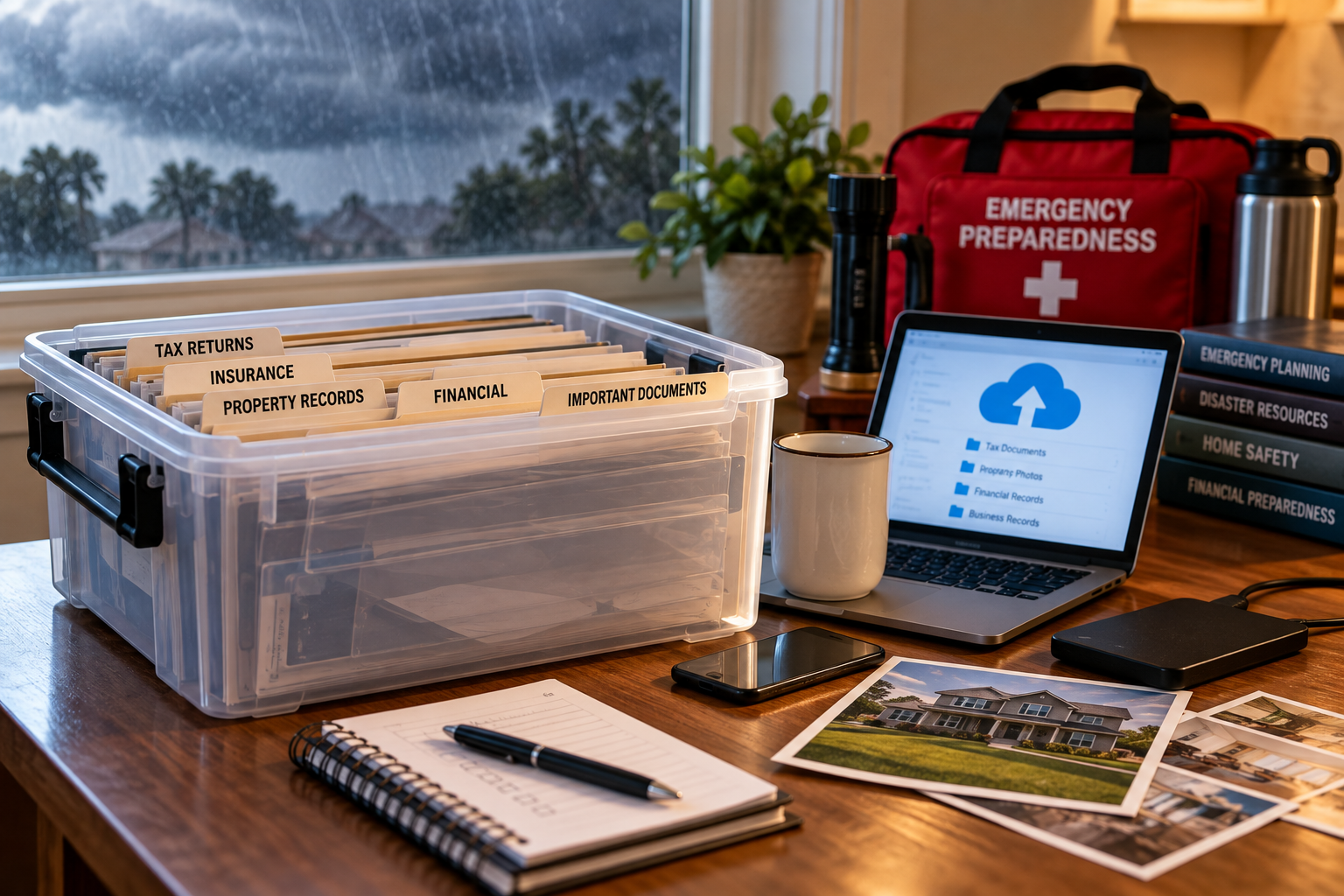
The IRS recommends safeguarding tax returns, birth certificates, Social Security cards, insurance policies, property titles and other important records. Paper documents should be kept in waterproof and fireproof containers whenever possible.
Businesses should think beyond tax returns. Accounting records, payroll information, employee records, banking information, insurance documents and records establishing ownership and value of business property could all become important after a disaster.
Good recordkeeping is valuable throughout the year, but it can become critical when records are suddenly damaged or inaccessible.
2. Make Electronic Backups Part of Your Disaster Tax Preparedness
Even documents stored in a filing cabinet or safe can be vulnerable to fire, flooding and severe weather.
The IRS recommends scanning important paper records and maintaining electronic copies on a secure device or through secure cloud storage. Many banks and financial institutions also provide electronic access to statements and other records.
Businesses should periodically review their backup procedures as part of their disaster tax preparedness plan. A backup isn’t particularly useful if no one knows how to access it when the primary system is unavailable.
3. Document Your Property Before You Need to Prove What You Owned
Imagine trying to create a complete inventory of your home or business after everything has been damaged.
Photographs and videos of your home, vehicles, valuable personal property, business equipment and other assets can help establish what existed before a disaster.
The IRS recommends documenting valuable property because these records may help support insurance claims as well as certain tax claims involving property losses. The IRS also provides disaster loss workbooks that individuals and businesses can use to create inventories of belongings and equipment.
Individuals can also review IRS Publication 584 for personal-use property, while Publication 584-B is designed for business property.
4. Know How to Recover Your IRS Tax Records
What happens if your copies of previous tax returns are destroyed?
Taxpayers may still be able to retrieve important information directly from the IRS.
An IRS Individual Online Account provides access to certain tax information, including transcripts and notices. The IRS also provides several methods for taxpayers to get tax records and transcripts.
Not every transcript contains the same information. Our guide to IRS tax transcripts explains the five primary transcript types, what information each contains and when taxpayers may need them.
This is also a good reason not to wait for an emergency before establishing access to your IRS account and understanding what tax records are available electronically.
5. Understand How IRS Disaster Tax Relief Works
One of the biggest misconceptions surrounding disasters is that a disaster automatically extends everyone’s tax deadlines.
It doesn’t.
When the IRS grants disaster tax relief, it identifies the affected geographic areas, the applicable postponement period and the specific filing, payment or other tax deadlines covered by the relief.
For taxpayers whose IRS address of record is located within a covered disaster area, qualifying relief is generally applied automatically.
Taxpayers should always review the IRS’s current Tax Relief in Disaster Situations information and the announcement for their specific disaster rather than assuming a filing or payment deadline has changed.
There are also situations in which someone outside the designated disaster area may qualify for relief. For example, necessary records may be located within an affected area. Those circumstances can require additional action by the taxpayer.
6. Understand That Disaster Losses May Affect Your Taxes
Individuals and businesses that experience uninsured or unreimbursed disaster-related losses may have federal tax considerations, depending on the circumstances and applicable tax law.
The rules surrounding casualty and disaster losses can be complicated. The type of disaster, property involved, insurance reimbursements and other factors can affect whether and how a loss is treated for federal tax purposes.
The IRS directs taxpayers to Publication 547, Casualties, Disasters, and Thefts for additional information about disaster-related losses.
This is another reason documentation matters. Photographs, property inventories, purchase records, insurance information and other evidence can become important when establishing a loss.
7. Businesses Should Include Payroll in Disaster Tax Preparedness
For businesses, disaster tax preparedness should include a plan for maintaining payroll and federal tax-payment responsibilities if normal operations are interrupted.
The IRS recommends that employers using a payroll service provider ask whether the provider has a fiduciary bond. Eligible businesses can also use an IRS Business Tax Account to access balances, payments and payment history, while registered Electronic Federal Tax Payment System users can continue using EFTPS to make federal tax payments.
Our guide to payroll tax responsibilities explains additional steps employers should take throughout the year to maintain accurate withholding, deposits, filings and payroll records.
Maintaining access to those records can become especially important when a disaster disrupts normal business operations.
What Happens to Tax Deadlines After a Disaster?
The most important takeaway isn’t that every Revenue Officer will immediately begin seizing aWhen the IRS announces disaster relief, certain tax filing and payment deadlines falling within the designated postponement period may be moved to a later date. However, the exact relief varies by disaster.
Taxpayers should verify three things:
- Whether their location is included in the designated disaster area.
- Which tax deadlines or obligations are covered.
- The new deadline established by the IRS.
This can be particularly important for taxpayers who already have unresolved IRS issues.
Someone dealing with IRS tax debt, an IRS installment agreement, unfiled returns or an active collection matter shouldn’t assume a disaster announcement automatically suspends every existing obligation.
Understanding the specific relief that applies to your circumstances is essential.
What If You’re Already Dealing With an IRS Tax Problem?
Disaster preparation takes on another dimension when a taxpayer is already dealing with the IRS.
Important notices, transcripts, prior tax returns, financial statements and records of communication with the IRS should be included among the documents you protect.
If you’re already facing collection activity, understanding the IRS collection process can also help you recognize which notices and deadlines may require attention.
Taxpayers should also remember that they have rights when dealing with the IRS. The Taxpayer Bill of Rights includes protections such as the right to be informed, the right to challenge the IRS’s position and be heard, and the right to appeal an IRS decision in an independent forum.
A disaster can create extraordinary circumstances, but it doesn’t eliminate the importance of understanding your existing tax situation.
Disaster Tax Preparedness Makes Recovery Easier
You cannot prevent a hurricane, tornado, wildfire, flood or severe storm.
You can make it easier to prove what you owned, retrieve important financial information and determine what tax relief may be available afterward.
Good disaster tax preparedness means protecting important documents, creating secure electronic backups, documenting property, knowing how to retrieve IRS records and understanding where to find reliable disaster-relief information.
And if an existing IRS problem becomes part of the situation, understanding your tax resolution options can help you determine the appropriate next steps.
At Cheshier Tax Resolution, we help taxpayers understand IRS collection problems, their taxpayer rights and the resolution options that may be available based on their individual circumstances.
Disaster tax preparedness can’t prevent an emergency, but it can make the financial and tax recovery process considerably easier to navigate.
Frequently Asked Questions About Disaster Tax Preparedness
Does the IRS automatically extend tax deadlines after a disaster?
Not always. When the IRS grants disaster tax relief, it identifies the affected locations, postponement period and tax obligations covered. Eligible taxpayers located in designated disaster areas generally receive qualifying relief automatically.
What tax records should I protect before a disaster?
The IRS recommends protecting tax returns and important documents such as birth certificates, Social Security cards, insurance policies and property titles. Maintaining secure electronic copies can provide an additional layer of protection.
What if my tax records are destroyed?
Taxpayers may be able to retrieve information through their IRS Individual Online Account or obtain tax transcripts from the IRS. The appropriate transcript depends on the information you need.
Should I photograph my property before a disaster?
Yes. The IRS recommends documenting homes, businesses, vehicles and other property with photographs or video. This documentation may help substantiate losses for insurance and tax purposes.
Does disaster relief stop an existing IRS collection case?
Taxpayers should not assume that a disaster declaration automatically stops every IRS collection obligation. The relief provided depends on the specific IRS disaster announcement and the taxpayer’s circumstances. Someone already dealing with IRS collection should determine exactly how the announced relief affects their case.
Stay Connected!
Stay connected with Cheshier Tax Resolution for updates on community involvement, tax law changes, and insights that help taxpayers stay compliant and informed – we invite you to subscribe to our monthly newsletter.
Our newsletter delivers:
- Updates on tax law changes
- Insights from real resolution cases
- Proactive planning strategies
- Important filing deadlines and compliance reminders
- Company announcements and celebrations