Could the Kwong Case Apply to You? Here’s How to Find Out
You’ve probably seen headlines about the Kwong v. United States case and the possibility that some taxpayers could be entitled to refunds of IRS penalties and interest assessed during the COVID-era disaster relief period.
The attention is understandable.
It sounds simple.
If the courts ultimately uphold the interpretation at the center of the case, millions of taxpayers could potentially be affected.
But before taxpayers get too excited—or dismiss the opportunity entirely—there’s an important question to answer:
Could the Kwong case actually apply to you?
The answer depends on several factors, including the type of penalties assessed, when they were assessed, and whether steps are taken before important deadlines expire.
What Is the Kwong Case About?
At the center of Kwong v. United States is a dispute involving the IRS’s application of disaster relief provisions during the COVID-19 emergency period.
The argument centers on whether certain tax deadlines were automatically extended during the federally declared disaster period and whether penalties and interest assessed during that timeframe were legally valid.
While the litigation continues, tax professionals across the country are encouraging potentially affected taxpayers to review their accounts and consider filing protective refund claims before important deadlines pass.
You can learn more about the National Taxpayer Advocate’s position on the issue through the Taxpayer Advocate Service blog
Who May Be Affected by the Kwong Case?
Not every taxpayer will qualify.
However, you may want to investigate further if you:
- Paid IRS penalties between 2020 and 2023
- Received failure-to-file penalties
- Received failure-to-pay penalties
- Had interest assessed on certain tax liabilities during the COVID-era relief period
- Filed individual or business tax returns during the affected years
- Received IRS notices assessing penalties or interest
Potentially affected taxpayers may include:
- Individuals
- Self-employed taxpayers
- Schedule C filers
- Partnerships
- S Corporations
- Small business owners
The key is determining whether your specific penalties fall within the timeframe and circumstances currently being discussed.
Who May Not Be Affected?
This is the question many articles are failing to address.
The reality is that some taxpayers may spend time pursuing relief only to discover the case does not apply to their situation.
You may be less likely to benefit if:
- No penalties were assessed during the relevant period
- The penalties fall outside the dates involved in the litigation
- Your issue involves unrelated IRS assessments
- Your account history does not include potentially affected transactions
This is why reviewing transcripts and account records is so important.
The headlines alone cannot tell you whether you qualify.
What Records Will You Need?
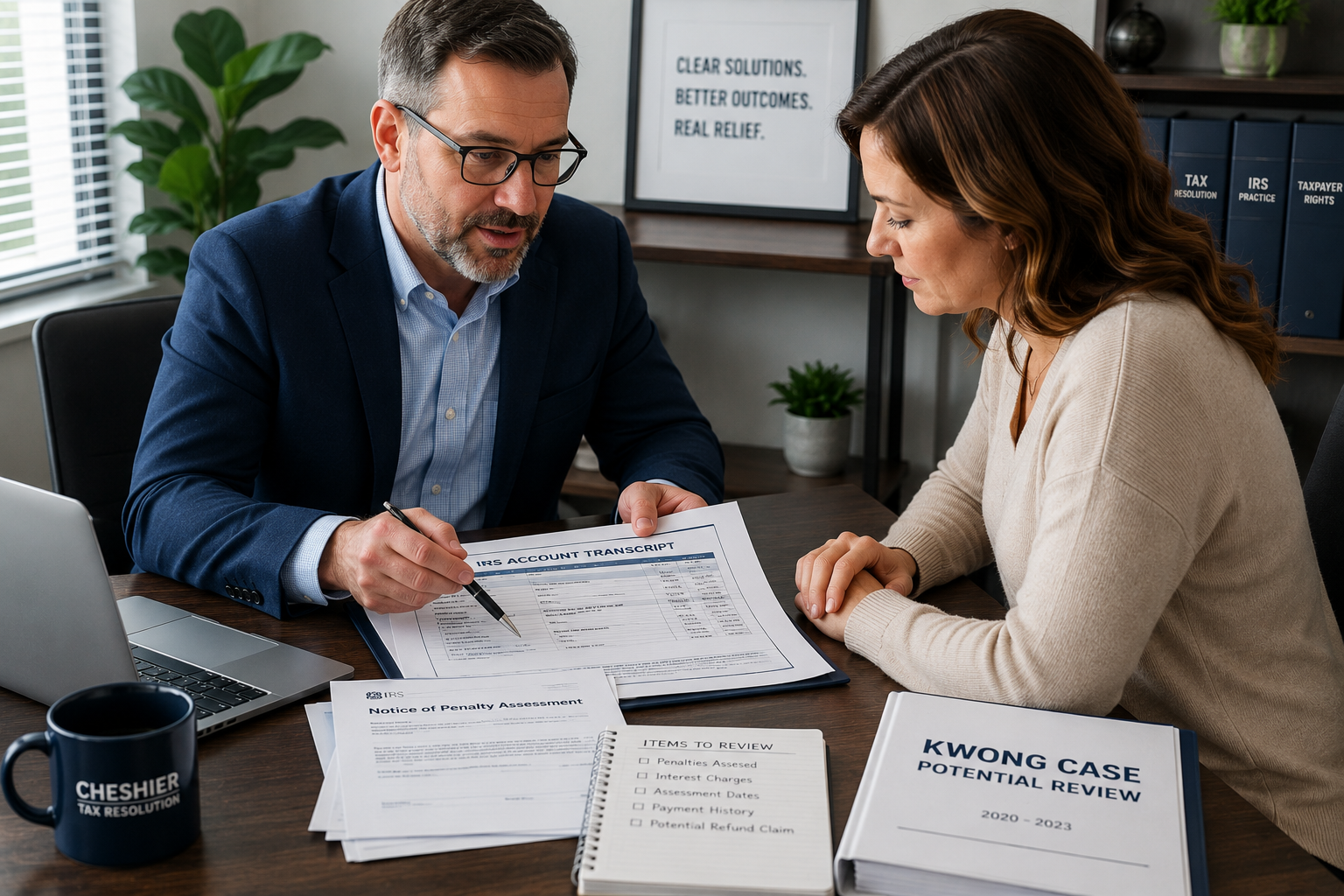
One of the first steps in evaluating a potential Kwong claim is gathering the right information.
Important records may include:
- IRS account transcripts
- Penalty notices
- Balance due notices
- Payment history
- Prior IRS correspondence
Many taxpayers do not realize that IRS transcripts often contain critical information regarding assessments, payments, and penalty calculations.
If you are unsure how to obtain your transcripts, a tax resolution professional can offer that service as a fee, or the IRS provides online account access and transcript request options for some records through its website
Why Timing Matters
One of the biggest concerns surrounding the Kwong case is timing.
Many tax professionals are encouraging potentially affected taxpayers to evaluate whether filing a protective refund claim may be appropriate before certain limitation periods expire.
A protective refund claim does not guarantee a refund.
Instead, it preserves your rights while litigation continues.
For some taxpayers, waiting until the courts issue a final decision may be too late.
Why Professional Review Matters
The Kwong case is generating significant attention, but determining whether it applies to a specific taxpayer is not always straightforward.
The review process often involves:
- Analyzing IRS transcripts
- Identifying penalty assessments
- Evaluating relevant dates
- Reviewing account history
- Determining whether protective claims may be warranted
At Cheshier Tax Resolution, we are developing a structured review process to help taxpayers evaluate potential eligibility and understand their options.
Just because a taxpayer paid penalties during the COVID years does not automatically mean they qualify.
Likewise, some taxpayers who assume they are not affected may discover otherwise after a detailed review.
What Happens Next?
The courts will ultimately determine how the legal issues in the Kwong case are resolved.
In the meantime, taxpayers have an opportunity to gather information, understand their account history, and evaluate whether action may be appropriate.
The worst outcome is often waiting too long to find out.
Final Thoughts
The Kwong case may not apply to everyone.
But it could apply to more taxpayers than many people realize.
Understanding whether you may be affected starts with reviewing the facts—not the headlines.
If you’ve paid IRS penalties between 2020 and 2023, now may be the right time to review your account history and determine whether further action should be considered.
The opportunity may be uncertain.
The deadline won’t be.
Frequently Asked Questions
What is the Kwong Case?
The Kwong Case is ongoing litigation involving IRS penalty assessments and disaster relief provisions during the COVID-era emergency period.
Who may qualify for a Kwong-related refund claim?
Taxpayers who paid certain IRS penalties or interest between 2020 and 2023 may potentially be affected, depending on their circumstances.
What is a protective refund claim?
A protective refund claim preserves a taxpayer’s right to seek a refund while legal issues are still being resolved.
How do I know if the Kwong Case applies to me?
The best way to determine potential eligibility is to review IRS transcripts, penalty assessments, and account history.
Stay Connected!
Stay connected with Cheshier Tax Resolution for updates on community involvement, tax law changes, and insights that help taxpayers stay compliant and informed – we invite you to subscribe to our monthly newsletter.
Our newsletter delivers:
- Updates on tax law changes
- Insights from real resolution cases
- Proactive planning strategies
- Important filing deadlines and compliance reminders
- Company announcements and celebrations