
Tax Tip Tuesday: Business Expense Deductions: 7 Smart Ways to Lower Your Tax Bill
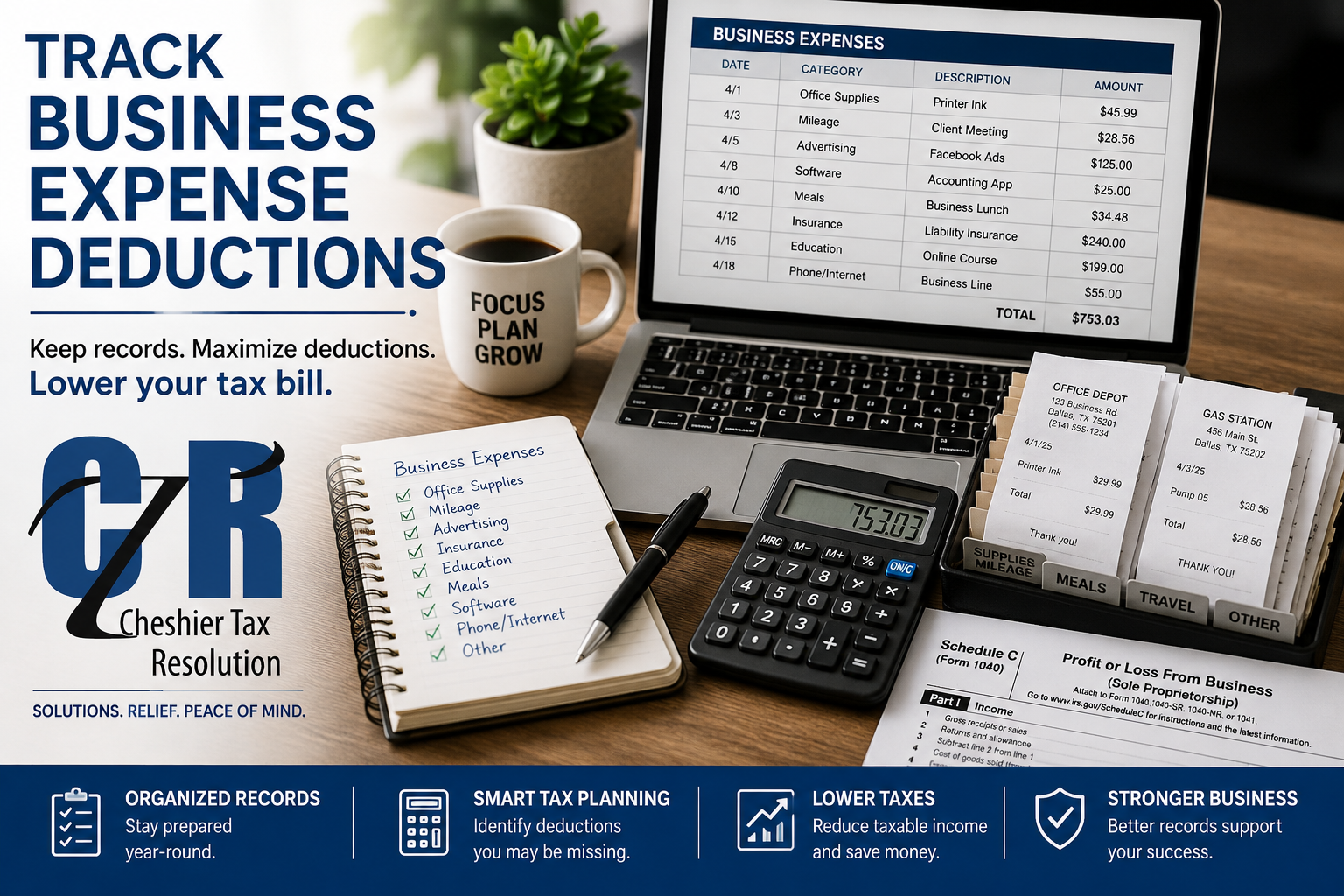
Business Expense Deductions are one of the most valuable tax-saving opportunities available to self-employed individuals and small business owners. Every legitimate expense you document may reduce your taxable net income, but only when you can show that the cost was connected to your business.
Whether you are a sole proprietor, independent contractor, freelancer, consultant, or gig worker, consistent expense tracking can lower your tax bill and make tax season far less stressful.
In this week’s Tax Tip Tuesday, we explain which costs may qualify, how to organize your records, and why strong bookkeeping habits matter throughout the year.
Why Business Expense Deductions Matter
The IRS encourages taxpayers to save for retirement by offering tax advantages through The IRS generally allows business owners to deduct expenses that are ordinary and necessary for operating a trade or business. An ordinary expense is common in your industry. A necessary expense is helpful and appropriate for running the business.
Deductible costs reduce net business income. That may lower both federal income tax and self-employment tax. The IRS explains these basic standards in its Business Expenses guidance.
The deduction is only as strong as the records supporting it. Without receipts, invoices, mileage logs, or other evidence, a legitimate expense may be difficult to defend if the IRS asks questions.
Business Expense Deductions at a Glance
| Common Expense | Typical Treatment |
| Office supplies | Often deductible |
| Advertising and marketing | Often deductible |
| Business mileage | May qualify with proper records |
| Website and software | Often deductible |
| Internet and phone | Business-use portion may qualify |
| Meals | May qualify under specific IRS rules |
| Personal purchases | Generally not deductible |
Report Business Expense Deductions Correctly
Most sole proprietors report income and expenses on Schedule C (Form 1040), Profit or Loss From Business. Properly categorizing costs throughout the year can simplify tax preparation and reduce the chance of overlooking legitimate deductions. The Instructions for Schedule C explain where common types of income and expenses are reported.
A clean bookkeeping system also gives you a clearer picture of profitability. You can see what the business earns, what it spends, and where cash flow may need attention.
How to Track Business Expense Deductions
Do not wait until filing season to reconstruct twelve months of spending. Create a simple process and use it consistently.
- Scan or photograph receipts when purchases occur
- Use a dedicated business bank account and credit card
- Categorize transactions monthly in bookkeeping software
- Save invoices, contracts, and proof of payment
- Reconcile accounts so missing or duplicated transactions are caught early
For detailed recordkeeping guidance, review IRS Publication 583, Starting a Business and Keeping Records. The IRS also provides a practical overview of recordkeeping requirements for small businesses and self-employed taxpayers.
Separate Business and Personal Spending
Mixing personal and business purchases creates confusion. It also makes it harder to explain deductions if your return is examined.
A separate business checking account and credit card create a cleaner audit trail. They do not replace receipts, but they make monthly bookkeeping and year-end tax preparation much easier.
Track Mileage and Vehicle Costs
Vehicle deductions require more than a credit-card statement. Maintain a contemporaneous mileage log showing the date, destination, business purpose, and miles driven.
Mileage rates can change from year to year, so check the official IRS standard mileage rates before preparing your return.
Business Expense Deductions and Your Tax Strategy
Expense tracking works best as part of a larger plan. Self-employed taxpayers should also review Estimated Tax Payments, Bookkeeping Services, Quarterly Estimated Taxes, Business Tax Preparation, Transcript Monitoring Program, and Consult a Professional for Complex Tax Situations. These related topics can help you manage cash flow, avoid underpayment surprises, and maintain cleaner records throughout the year.
Common Recordkeeping Mistakes
- Waiting until tax season to organize receipts
- Mixing business and personal transactions
- Failing to track mileage as trips occur
- Relying only on bank statements
- Ignoring small recurring subscriptions
- Claiming personal expenses as business deductions
Small purchases may not seem important individually. Over a full year, however, they can add up to a meaningful deduction.
Business Expense Deductions Can Save You Money
Accurate records help self-employed taxpayers claim legitimate deductions, reduce taxable net income, and prepare more accurate returns. They also provide useful information for budgeting, pricing, financing, and future growth.
The habit is simple: document the expense when it happens. Future-you will be glad you did.
Local Help for Self-Employed Taxpayers
Cheshier Tax Resolution works with self-employed individuals and business owners throughout North Texas to understand deductible costs, improve recordkeeping practices, and address tax problems caused by inaccurate or incomplete filings.
Good bookkeeping is not just administrative work. It is the foundation of better tax planning.
Frequently Asked Questions
What are business expense deductions?
Business expense deductions are ordinary and necessary costs incurred while operating a trade or business. When properly documented and allowed under tax law, they reduce net business income.
Can I deduct business expenses without receipts?
The IRS expects taxpayers to maintain adequate records. Receipts, invoices, canceled checks, electronic records, mileage logs, and account statements may help support a deduction.
Where do sole proprietors report business expenses?
Most sole proprietors report business income and deductions on Schedule C filed with Form 1040.
Should I use a separate business bank account?
A separate account is not always legally required for a sole proprietor, but it greatly improves bookkeeping and creates a cleaner record of business activity.
How long should I keep business records?
Retention periods vary. Many records should be kept for at least three years, while some circumstances require longer. Keep asset records for as long as they affect depreciation or gain calculations.
HCan home-office costs qualify as business expense deductions?
They may qualify when the space and use meet applicable IRS requirements. The home-office rules are specific, so review eligibility before claiming the deduction.
Stay Connected
Stay connected with Cheshier Tax Resolution for updates on community involvement, tax law changes, and insights that help taxpayers stay compliant and informed – we invite you to subscribe to our monthly newsletter.
Our newsletter delivers:
- Updates on tax law changes
- Insights from real resolution cases
- Proactive planning strategies
- Important filing deadlines and compliance reminders
- Company announcements and celebrations